* This article has been edited and reconstructed based on the report submitted to the Kawamura Foundation for the Promotion of Culture and Arts.
-
The Apocalypse of WomenProject Name: The Apocalypse of WomenApplicant: Kyun-Chome
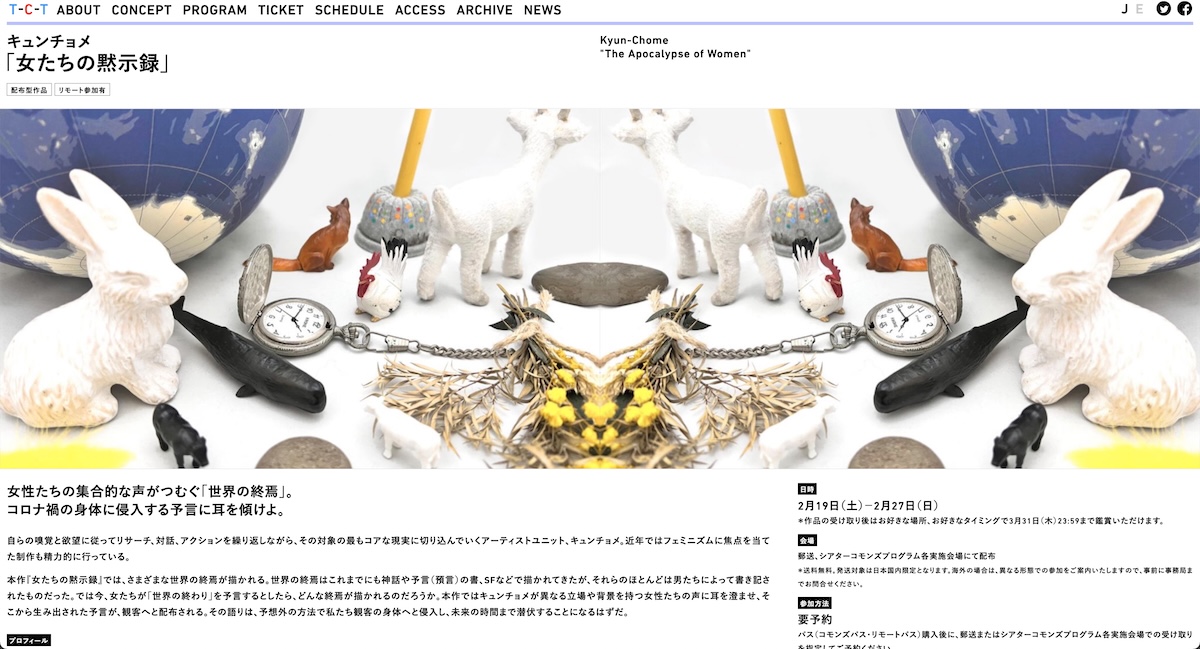
Kyun-Chome directed The Apocalypse of Women with the Socially Engaged Art Support Grant. In this project, the artist unit conducted interviews with women under different circumstances and weaved a story of the “end of the world” based on those women’s fears and anxieties. This “end of the world” pictured by those women was eventually adapted into art/play to be distributed so that the audience could participate remotely.
In the play, cookies in a black box are sent to the audience, and a piece of paper with a phone number comes out from inside. By calling the number, the audience can access the story of The Apocalypse of Women. The project took this distribution style to respond to the social situation of difficulty in transportation due to the new coronavirus. It was also to create a format to deliver the work to those who could not travel far or afford to see the play. Furthermore, the artists wanted to avoid social media and video streaming services, which have become the major battleground for misogyny. -
Tour Project IGENEProject Name: Tour Project IGENEApplicant: Bontaro Dokuyama
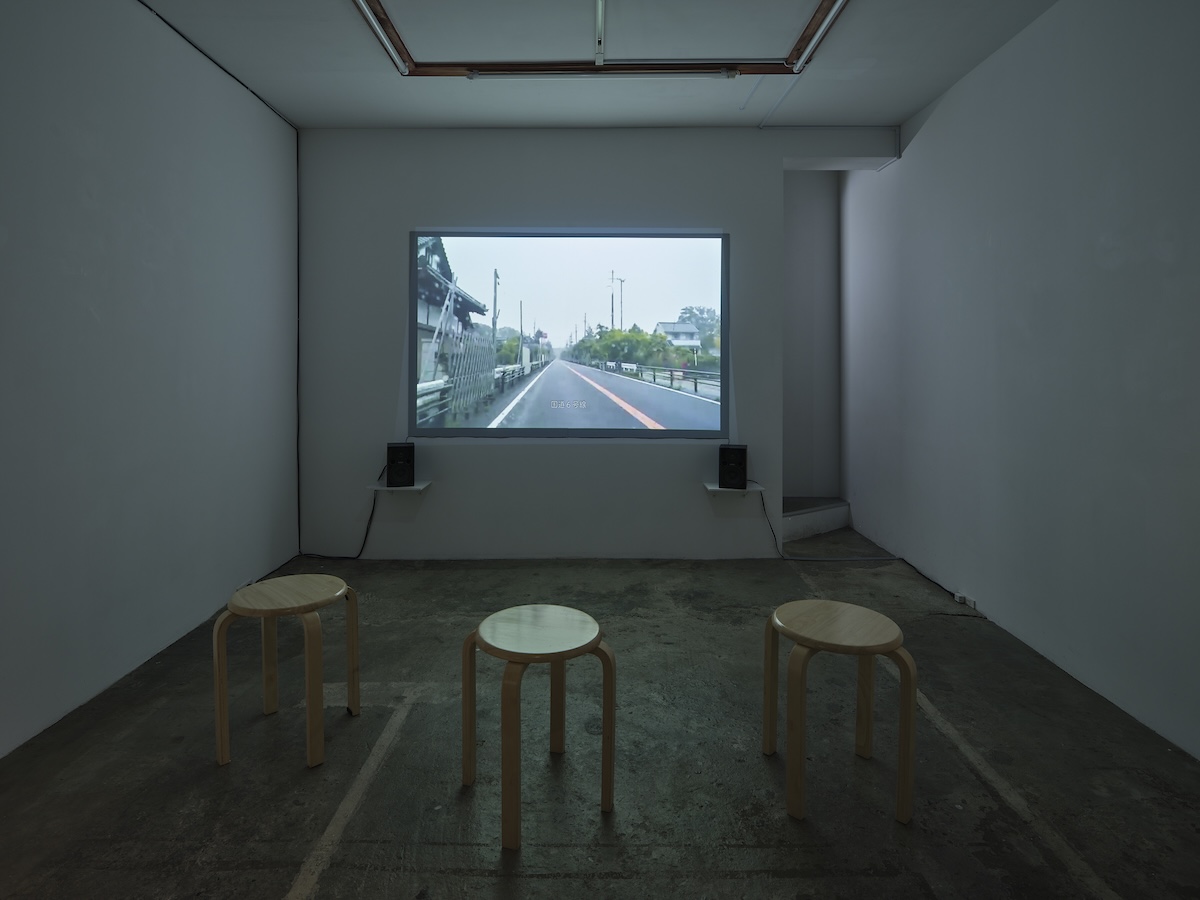
A prototype of the tour project IGENE was presented in the form of a solo exhibition in preparation for the implementation of the project, along with other related works. I planned this project in the Soso area of Hamadori, Fukushima Prefecture, where residents were forced to evacuate due to the Great East Japan Earthquake in 2011 and the accident at TEPCO's Fukushima Daiichi Nuclear Power Plant. After ten years, the town's reconstruction is gradually progressing, and the evacuation order to the difficult-to-return zone has started to lift partially. While some residents have returned to their hometowns as reconstruction progresses, others cannot go home in the difficult-to-return zones due to the lack of progress in decontamination work.
In the summer of 2020, for the first time, I accompanied former residents on a temporary visit to their homes. I entered the difficult-to-return zone with the permission received in advance to assist them in maintaining their cleared homes. It was a shocking experience beyond my imagination. It made me realize how we had only been talking about Fukushima from outside the difficult-to-return zone for the past ten years and how we should receive and consider what those affected feel about the disaster they suffered and the recovery process.