archive

* This article has been edited and reconstructed based on the report submitted to the Kawamura Foundation for the Promotion of Culture and Arts.

  • The Clothesline
    Project Name: The Clothesline
    Applicant: Our Clothesline with Mónica Mayer

    The Clothesline is an artwork presented by Mexican feminist artist Mónica Mayer in 1978. This participatory artwork allows participants to fill out small questionnaire sheets and hang them on clotheslines installed in the exhibition space, and also a socially engaged artwork to visualize the changes in social and personal consciousness and issues that have not been prioritized in the region or time.
    Through this work, Mónica Mayer questions various social issues such as harassment, exclusion, experiences of discrimination, and sexual violence, with an emphasis on violence and discrimination against women.
    The artwork was first exhibited in Japan at the Aichi Triennale 2019 (hereafter the Triennale) in Aichi Prefecture in 2019 and has since been shown throughout Japan.
    “Our Clothesline with Mónica Mayer” is an organization that supports the implementation of The Clothesline by Mónica Mayer in Japan.

    view the details

  • Chochomau Vernacular: Nishinari + Street + Nodate + Yatai
    Project Name: Chochomau Vernacular: Nishinari + Street + Nodate + Yatai
    Applicant: Breaker Project Executive Committee
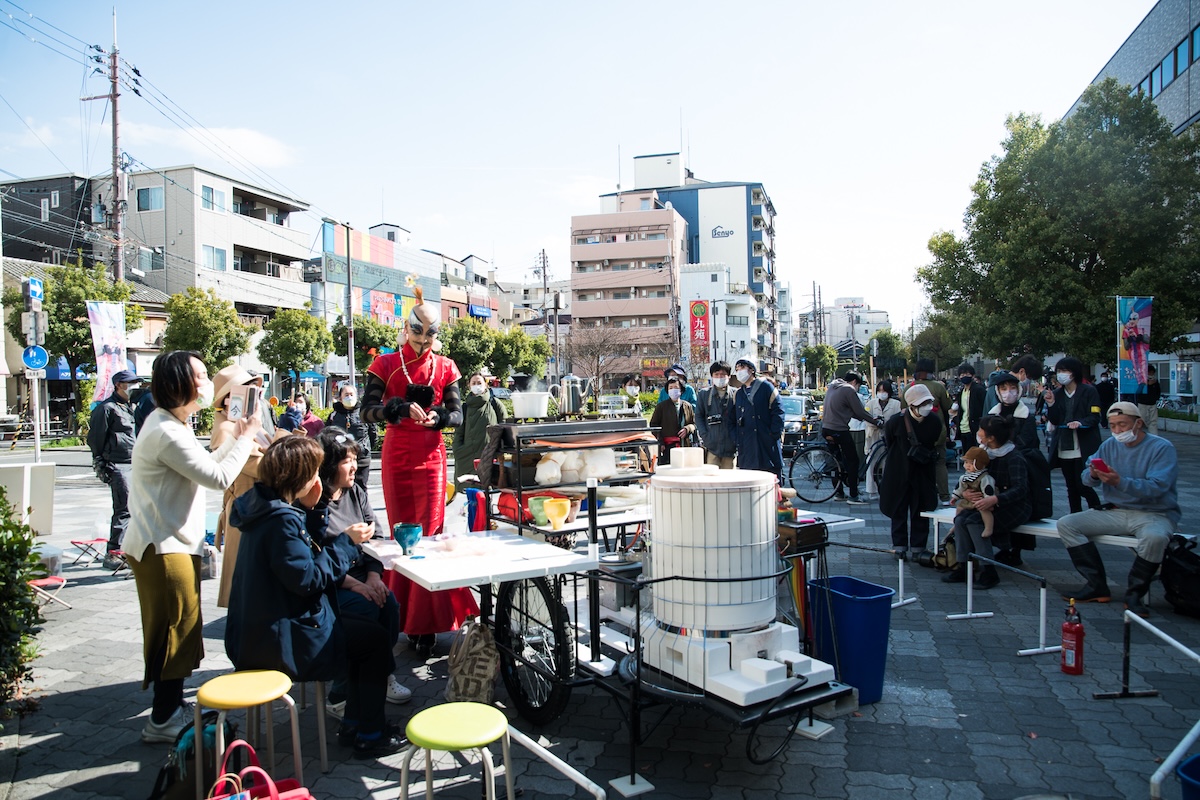
    “Chochomau Vernacular” (hereinafter called “Chochoverna”) is an art practice in which Breaker Project, a community-based art project in Nishinari-ku, Osaka City; and Kimura Toshiro Jinjin, an artist who has been engaged in Nodate for over 20 years, rethink the nature of public space. The title is a combination of the words chochomau (= get panicked and do something impromptu) and ‘vernacular,’ which refers to the idea that the local cultural landscape would be formed by the accumulation of various events, large and small, including the friction that occurs when one tries something new in a particular place, and the relationships that emerge from these occurrences.
     The venues for the “Chochoverna” events were decided on three distinctive “marginal spaces” found by repeatedly conducting walking events with participants. After coordinating and negotiating with the landowners, local residents, and the local government, we organized the events in the fall and spring.

    view the details