archive FY2023 ARCHIVE

* This article has been edited and reconstructed based on the report submitted to the Kawamura Foundation for the Promotion of Culture and Arts.

Project to build a solar-powered kayak from trash that has washed ashore in Tsushima, the biggest marine plastic waste landfill in Japan.

[Application project]
Project to build a solar-powered kayak from trash that has washed ashore in Tsushima, the biggest marine plastic waste landfill in Japan.

[Applicant]
Hydroblast

[Subsidy] 500,000 yen


[Overview]
Hydroblast is a collective founded by film director and actor Shingo Ota to create works across film, theater, and the visual arts. Ota has been collaborating with artist Sachia Kanou for several years.
While continuing to create with Kano, we confronted the reality of the coast of Tsushima City, Nagasaki Prefecture, being overwhelmed by washed-up trash. In this town—which receives the most marine plastic waste in Japan—they conceived a project to build a solar-powered kayak using the washed-up trash as material, and have been refining prototypes. We plan to launch the full-scale project in the summer of 2023, document the process, and transform it into a lecture-performance, a video work, and a rap piece. The purpose of this project is to demonstrate—through the process of “upcycling washed-up plastic waste into a kayak”—that even trash can be utilized as a material depending on the idea behind it, and to share this message with the public.


[Held / Implemented / Announced]

● Community Briefings, Coordination with Local Government, and Site Visits | April 27–29, 2023
In Tsushima City and various locations throughout Nagasaki Prefecture, we held briefings on the planned project and discussed implementation methods and long-term plans. We also conducted on-site visits, including to Iguchihama Beach (Tsushima City), where washed-up debris has become a problem.

<Locations> Tsushima City Hall, NPO Environmental Counseling Association Nagasaki (Sustaina Plaza Nagasaki), Nagasaki Prefectural Government Office, Art Space Hatoba, guesthouse Tachibana, and others
<Number of Participants> 15 people

Reflections: While we had been communicating primarily online up until then, meeting face-to-face with the various project leaders allowed us to coordinate more effectively and visualize the project’s feasibility. Additionally, kayaking out to the coast gave us a deeper understanding of the natural environment off the coast of Tsushima.


● Collecting Drifted Trash, Kayak Prototype | April 29

We collected plastic waste on the beach as part of the project to build a solar-powered kayak from drifted trash.


<Location> Iguchihama Beach

<Number of Participants> 2 people


Reflections: We were shocked by the sheer volume of drifted trash scattered across the beach—it seemed to never decrease no matter how much we picked up—and this experience served as a stark reminder of the depth of this problem. It was also a significant discovery to learn, from labels on the debris, that the washed-up trash included not only fishing gear from nearby waters but also a significant amount from neighboring countries (China, South Korea, and Southeast Asian nations). This experience reinforced the need to strengthen collaboration with these countries.
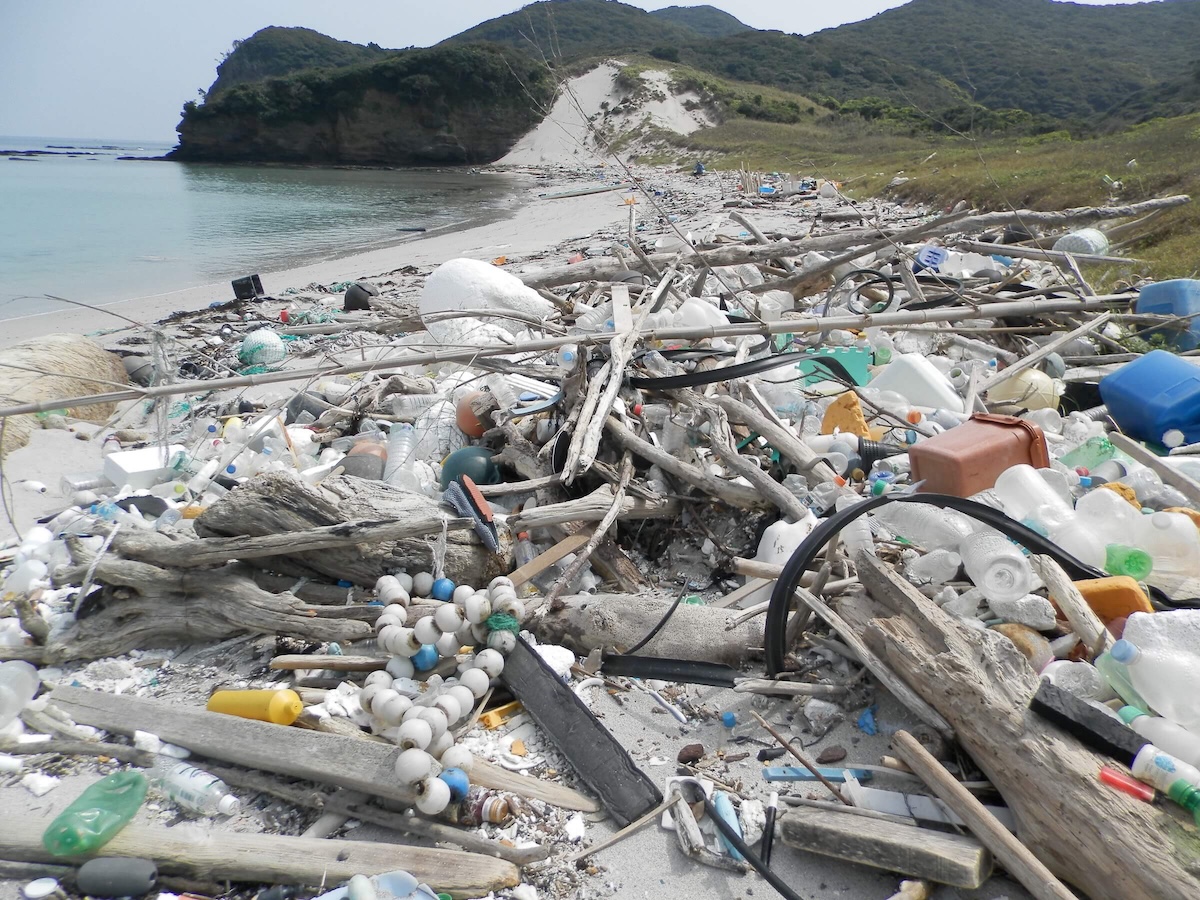
Beach debris on the coast of Tsushima

● Solar-powered Kayak Building and Test Ride Event | May 3–5
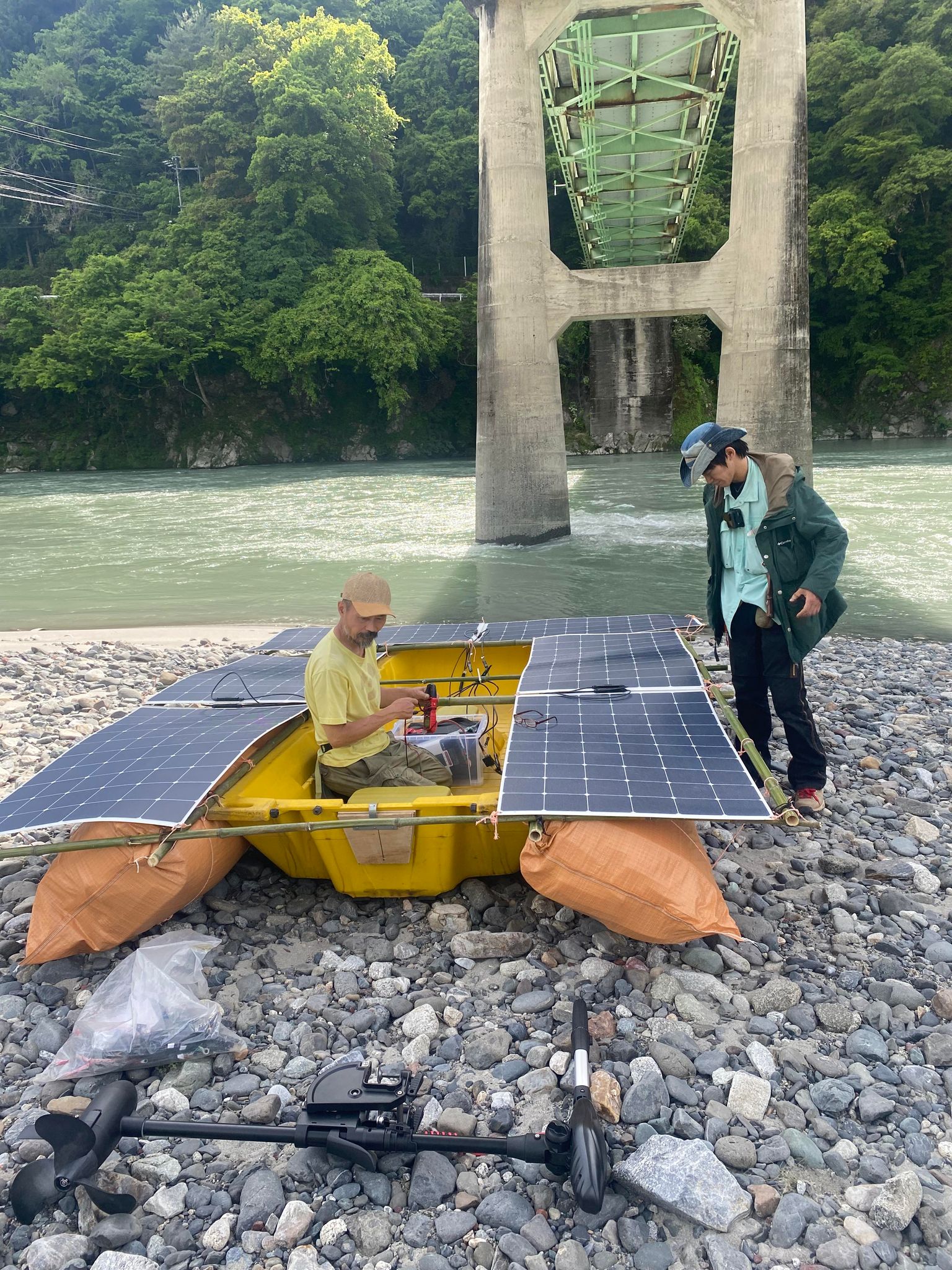
We invited artist Sachia Kano, who led the solar kayak building project, to Tenryu Village in Nagano Prefecture. Using the kayak built there—a village with which our organization’s representative, Ota, has had ties since his student days—we conducted a river-rafting tour.

<Location> Tenryu Village, Nagano Prefecture; Tenryu River
<Number of Participants> 12 people

Impressions: The site featured a river winding its way between mountain cliffs. Many researchers, journalists, and cultural center directors—all members interested in local resources—gathered to seek out rare views from the river that are not easily seen. They boarded the prototype boat for the cruise. We were able to discover cultural resources within the river basin, such as a collapsed bridge and traces of village life submerged beneath a dam. On the other hand, the boat still has room for improvement, with issues such as water leaks and limited range due to the battery life, making future challenges clear.
The boat-building process

● Solar-powered Kayak Construction | June 15–July 8
We were selected as resident artists at YAU (Yurakucho Art Urbanism) and during our stay we built a solar-powered kayak. We also conducted a test ride of the solar-powered kayak on the Arakawa River to evaluate its ride comfort and identify areas for future improvement.

<Location> YAU (Yurakucho, Tokyo), Arakawa River
<Number of Participants> 10 people

Reflections: The facility also functions as a coworking space, allowing us to exchange information and introduce our activities to other resident artists. Furthermore, we had the opportunity to discuss the future development of this project and potential collaborations with representatives from Mitsubishi Estate Co., Ltd., a member of YAU’s operating body. As a result, they expressed their intention to provide support, including financial assistance, in the future.

● Solar-powered Kayak Experience Event and Exhibition | July 15–16
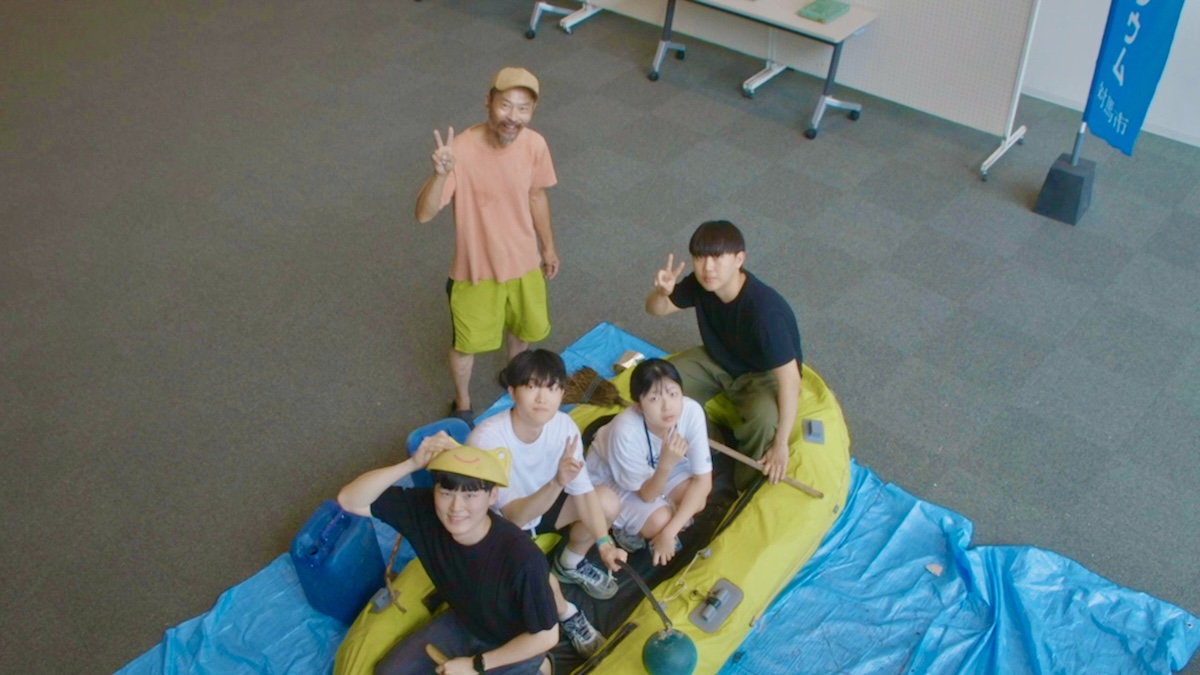
At the venue for the “Tsushima Marine Debris Symposium 2023,” an annual event hosted by Tsushima City, we held an exhibition and live demonstration of solar-powered kayak building. Additionally, we offered hands-on kayaking experiences using the solar-powered kayaks built during the demonstration as part of the “2023 Japan-Korea Citizen Beach Cleanup Workshop” held at Iguchihama Beach.

<Location> Tsushima City Exchange Center Event Hall, Iguchihama Beach
<Number of Participants> 300 people

Reflections: Through kayak-building and hands-on events, we deepened our exchange with students from Busan University of Foreign Studies who had visited from South Korea, and were able to foster mutual understanding and identify common challenges regarding the issue of marine debris.
Interaction with South Korean students at the “Tsushima Marine Debris Symposium”

● Screening of the Documentary Film “How to make a solar-powered boat” | September 15–22
We compiled footage of this project, including the recent activities, into a film and screened it as part of a collection of short films by Shingo Ota, representative of Hydroblast.

<Location> Toyooka Theater (Toyooka City, Hyogo Prefecture)
<Attendance> 55 people

Reflections: By incorporating progress reports on the ongoing project and future prospects into the film, we felt this served as a valuable opportunity for publicity, as it attracted individuals interested in participating in the project.


●Workshop on Building Boats from Plastic Waste | September 23

In collaboration with "Sachiya," the group to which artist Sachia Kano, who is in charge of kayak building, belongs, a workshop was held utilizing the boat-making know-how accumulated during this project to use plastic waste collected from leisure facilities and other places during the summer as boat materials.


<Location> Sakuma Town, Shizuoka Prefecture

<Number of Participants> 4 people


Reflections: This was an opportunity to reaffirm that the know-how gained from waste collection on Tsushima and subsequent kayak building can be applied and utilized in other regions as well.


[Outcome]

1. Summary
Through the creation of boats and kayaks using marine debris washed ashore in Tsushima, Nagasaki, we reaffirmed the profound nature of the marine debris problem. Furthermore, the creation of a film and theme song based on the resulting documentation represents a significant step forward, as it allows us to continue sharing this issue. In addition, the ability to safely operate the boats up to 50 kilometers per day has become a valuable asset for the project members, as this know-how can be shared with other regions and used to create opportunities for people to take a boat ride at any time.


2. Connections with South Korea

Through this project, we have deepened our relationship with students from Busan University of Foreign Studies, and we are planning further events in Japan and South Korea, such as a symposium, in 2024. In addition, we are collaborating with AAMP (Asian Artist Moving Image Platform) in Seoul to hold a screening of the video works produced for this project and a lecture in Seoul in the fall of 2024.


3. Potential for Project Development in Tsushima

The straight-line distance from Tsushima to Busan Port is approximately 50 kilometers. During the project, we learned from local fishermen and others that in the past, Japan-Korea exchange events such as long-distance swimming relays across this strait were held. In cooperation with these fishermen and other local residents, we are planning to hold an event to cross the strait using the solar-powered kayak boat we created, with a target date of 2025. Nagasaki Prefecture has been selected as the host prefecture for the National Cultural Festival in 2025, and we are proceeding with discussions and plans to hold the event as part of the "Nagasaki Peace Culture Festival 2025" program.
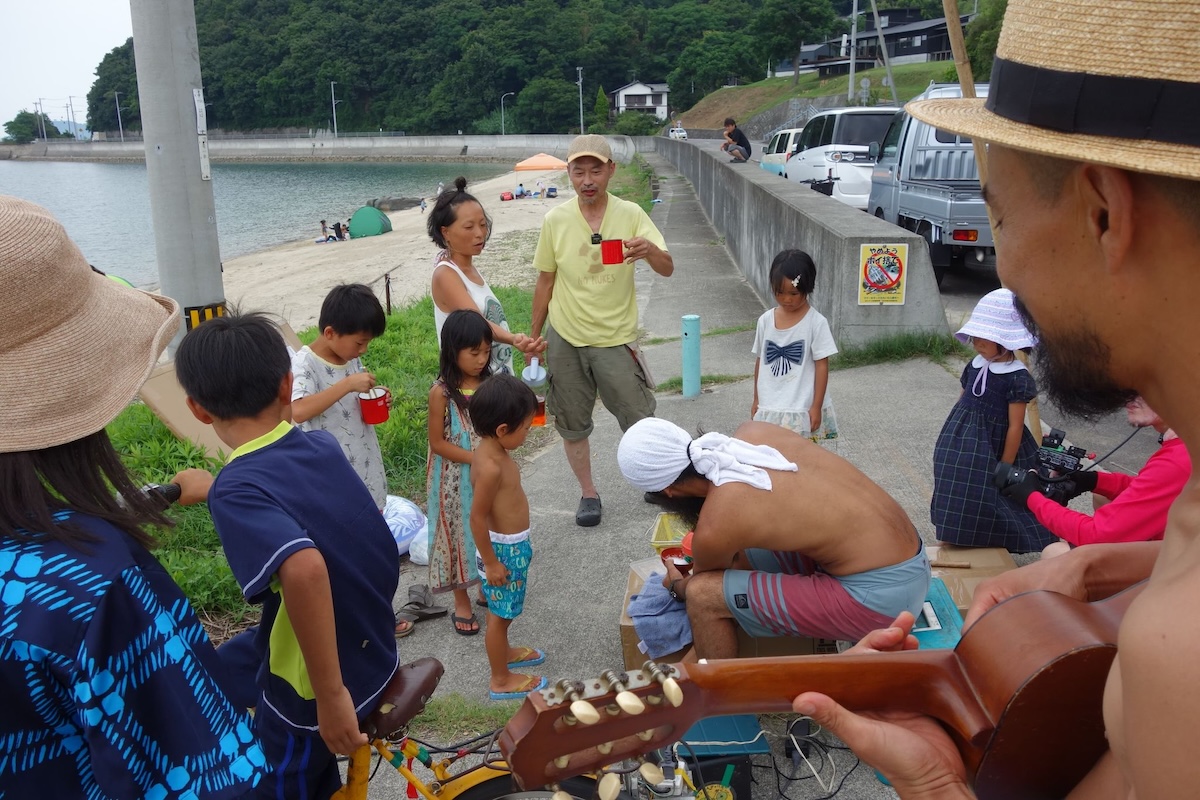
During the kayak building, there were also interactions with children (Iguchihama, Kagawa, etc.)
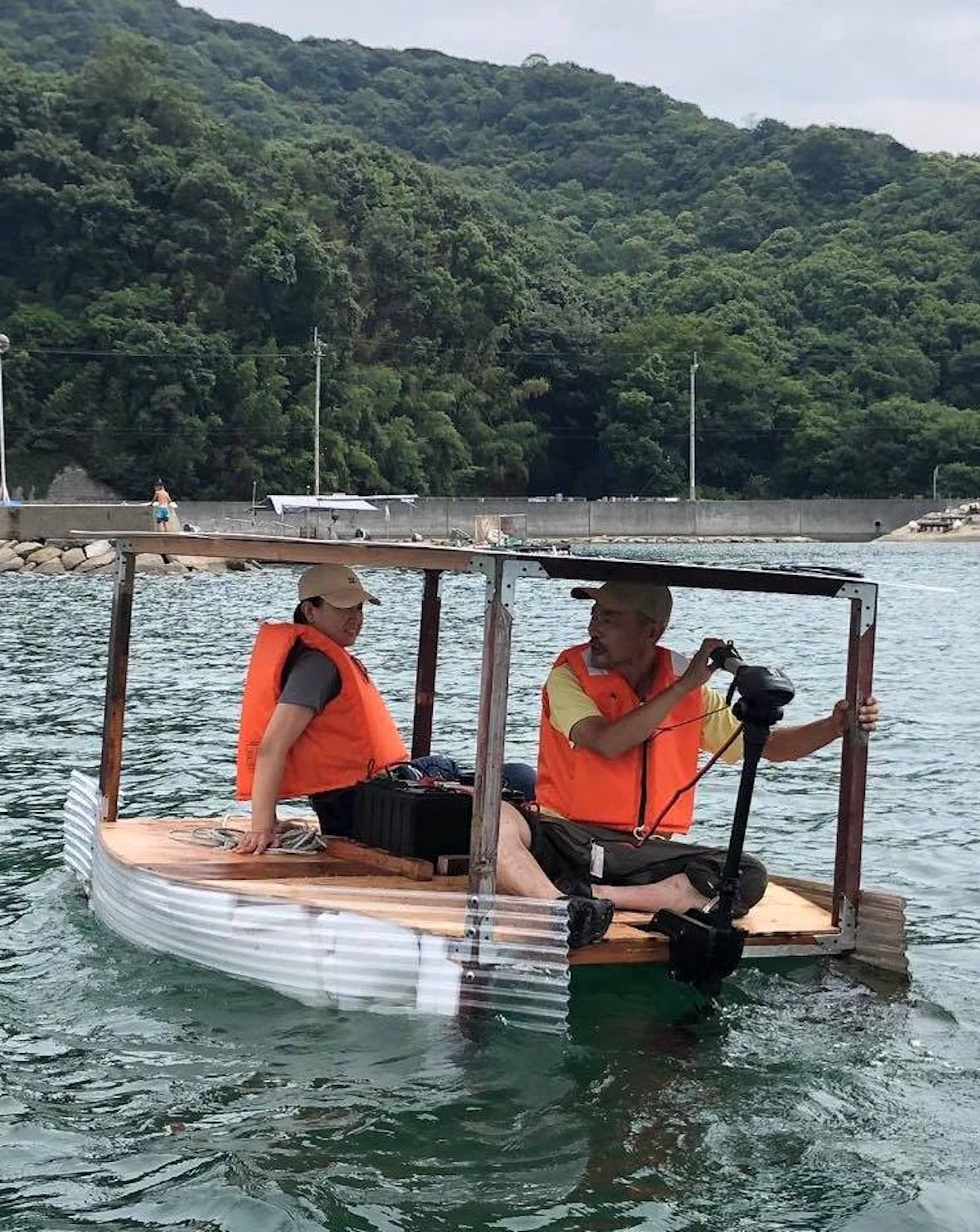
A scene from the test cruise
[Project Credits]
General Direction: Shingo Ota
Production and Performance: Kyoko Takenaka
Solar-powered Kayak Production, Music, and Artistic Collaboration: Sachia Kano
Accounting: Akinobu Kawatsu
Solar-powered Kayak Production and Safety Instruction: Yosuke Sue (TEBOLO)