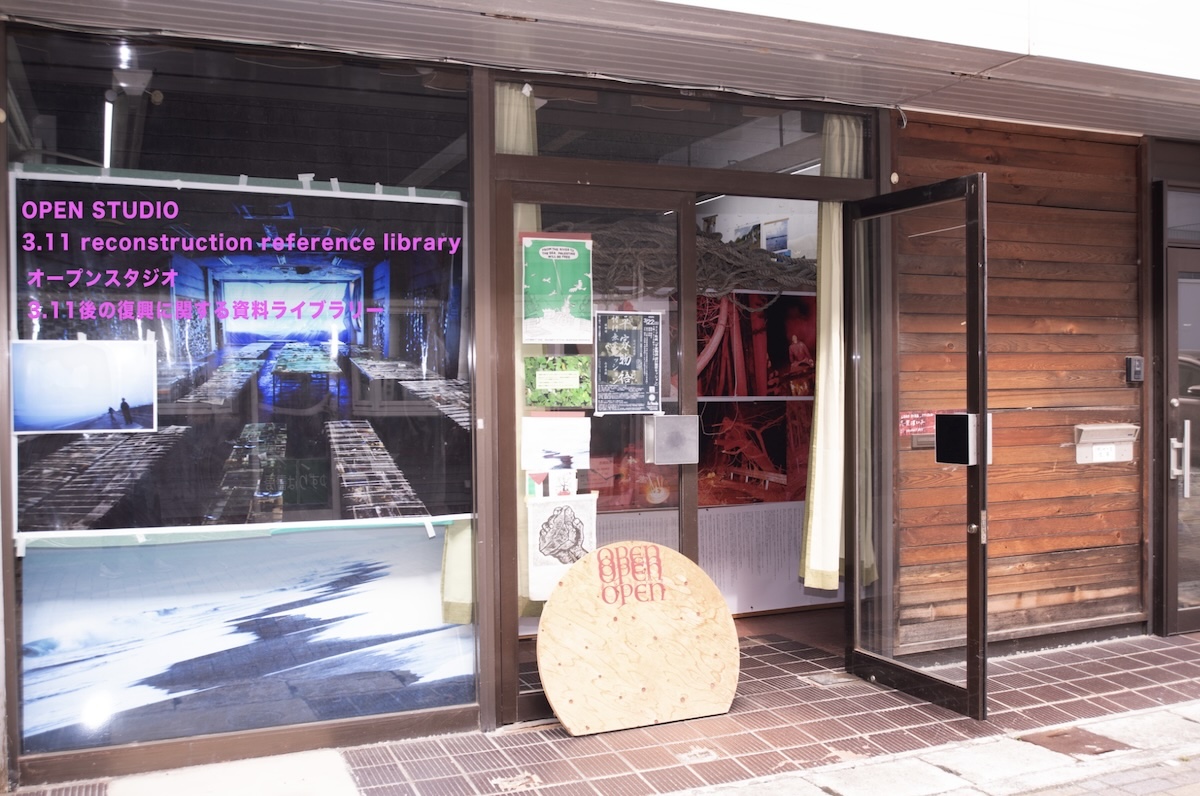
The historic downtown area of Ishinomaki City, Miyagi Prefecture, where the studio is located, was a disaster-stricken zone where the tsunami caused by the Great East Japan Earthquake reached an average height of approximately 2 to 3 meters. However, over the past 13 years, the shopping district has gradually recovered through building renovations and other efforts. By establishing my production studio in this area and operating an open studio featuring a library and permanent exhibitions on post-disaster reconstruction, I have inadvertently gained deep insight into the thoughts, attitudes, and practices of the local people regarding nature and the cycle of life during their journey from disaster to recovery. While this studio is primarily my personal workspace, opening its doors—and, by extension, opening the minds of my production team—has provided an opportunity to hear responses and voices beyond what we might have anticipated.
A short distance from this location, in the Kadonowaki district of Ishinomaki City, there are sites such as the “Ishinomaki City Earthquake Ruins: Kadonowaki Elementary School Ruins” and the “Miyagi Great East Japan Earthquake Tsunami Memorial Museum.” Near the mouth of the Kitakami River lies the “Ishinomaki Earthquake Ruins: Okawa Elementary School.” Along the eastern coast of Japan, there are indeed numerous public memorial halls and disaster-affected structures listed by the “3.11 Densho Road Promotion Organization.” In recent years, as if in response to these official narratives, there has been a noticeable increase in places known as “alternative memorial halls”—handcrafted spaces established through personal experiences and dialogue—and I feel that collaborative events involving these various entities have also become more frequent.
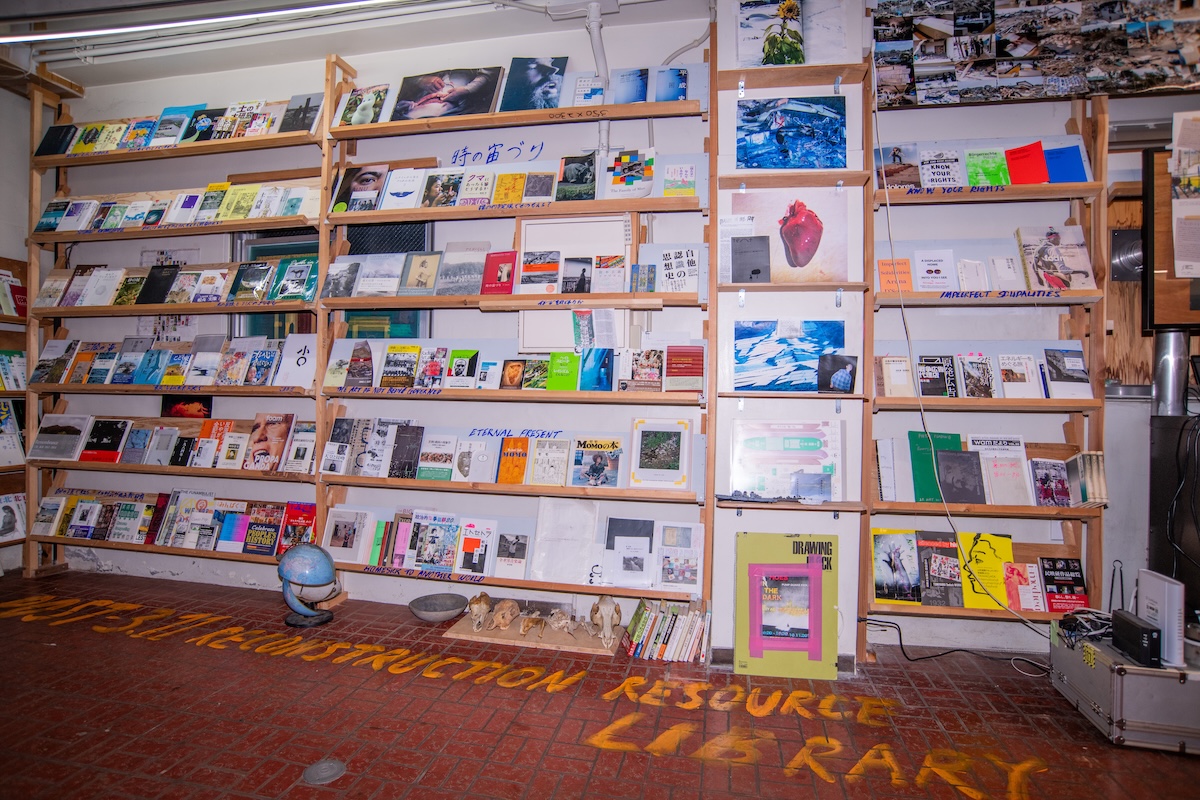
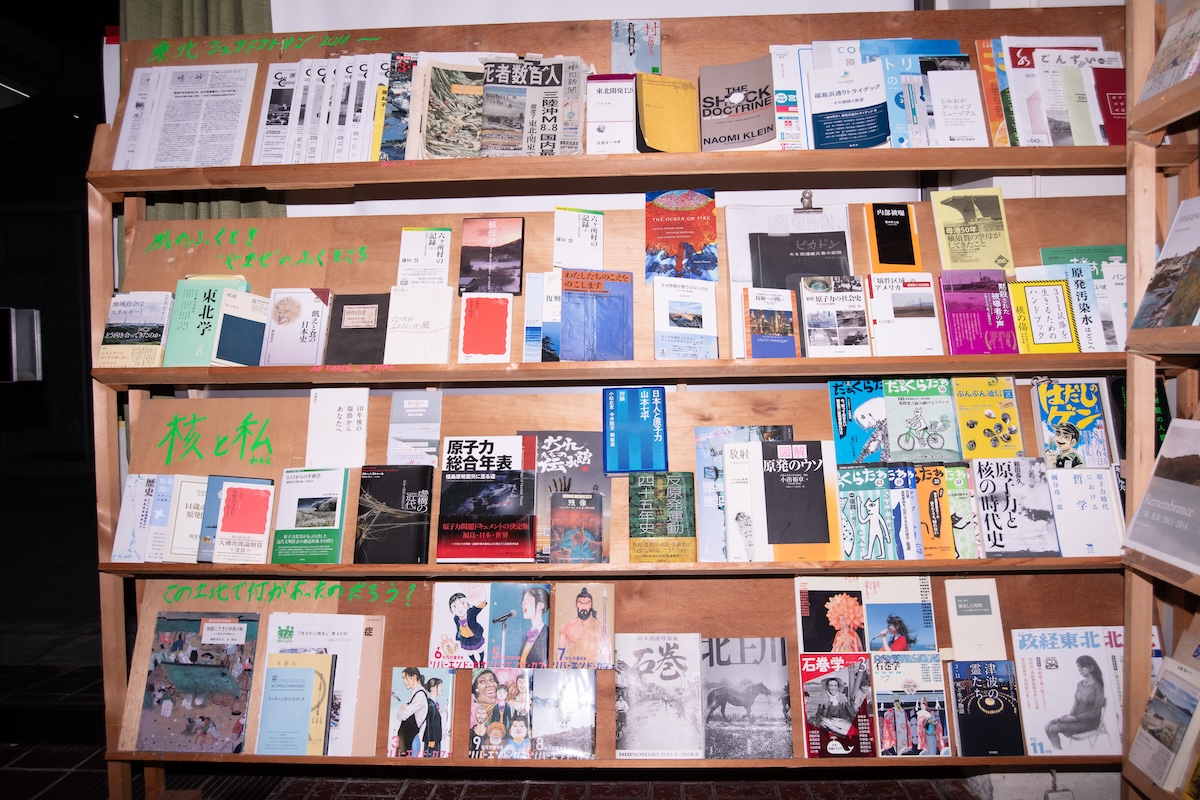
The “Open Studio / 3.11 reconstruction reference library,” which I have been running for the past year, is composed primarily of books and other materials I have personally engaged with over the past 13 or 14 years. I arranged the bookshelves so that all books are displayed with their covers facing out—making them easy for visitors to pick up—and so that the genealogy and relationships between them can be visually perceived through their spatial arrangement.
Bookshelves from the “3.11 reconstruction reference library”
(1) Materials documenting the climate, history, and social changes to date in this region, which was referred to as “Tohoku” by the central government. Additionally, materials such as oral history records provide insight into the diverse lives led by the people of this region and the stories they have shared.
(2) All materials related to the March 2011 accident at the Tokyo Electric Power Company’s Fukushima Daiichi Nuclear Power Plant. Materials that allow for examination from various perspectives, covering the history of nuclear power, the development of physics and science and technology worldwide leading up to the development of atomic bombs, the reality of the atomic bombings of Hiroshima and Nagasaki and their impact on the people, the subsequent trend toward the peaceful use of nuclear energy, all types of nuclear power plant accidents, and the current front lines of nuclear weapons development.
(3) Materials that allow for an examination—from the perspective of nature itself (soil, microorganisms, plants, and wildlife)—of what kind of world existed before the modern era in terms of the relationship between nature and human society, and how the modern era began and took hold.
(4) Materials designed to deepen knowledge (regarding the techniques and history of propaganda) about the substance of image strategies and advertisements across various media—produced by advertising agencies and others using substantial funding—to promote “creative reconstruction” in the wake of the Great East Japan Earthquake.
(5) Materials such as zines (booklets) and posters independently edited, printed, bound, and sold by individual artists, collectives, and civic groups around the world, based on themes related to their daily concerns and issues.
Many people from both Japan and abroad visited the studio. Some would pick up a book and read it for the entire duration of our opening hours; others came every week; and students and neighbors would often stop by, curious to see what was going on.
On the wall at the studio entrance, we displayed a long interview with Nozomi Onodera—a hunter primarily engaged in deer culling on the Oshika Peninsula in Ishinomaki and meat processing at a local facility—along with a photographic series based on that conversation. The exhibition was designed to help visitors understand what is happening to Ishinomaki’s natural environment.
Opposite the bookshelves, a collage titled “HUMAN HIGHWAY: 14 Years Since the Great East Japan Earthquake—A Roadmap of the Reality of Social and Economic Reconstruction, the Interconnections of Individual Lives, and the Causality of Our Existence” was displayed, woven together with dialogues with various people to expand the narrative.
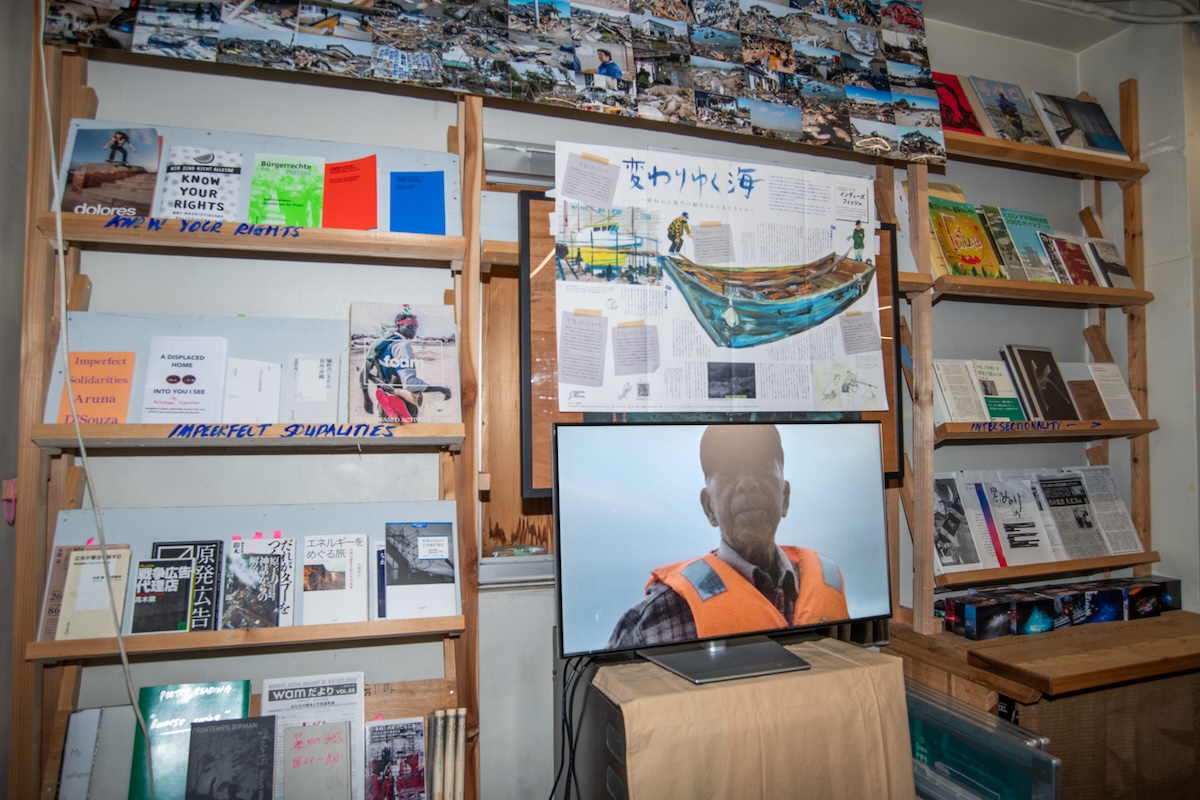
The studio features a display where visitors can watch footage (totaling four hours) of an interview with Tsuyoshi Koya, a 95-year-old active fisherman who continues to fish at Momoura Fishing Port in Ishinomaki. Born in Momoura in 1929, Mr. Koya joined after the WWII, the 52nd Sakiyoshimaru—a vessel planned by the Japanese government in 1960 to earn foreign currency (dollars)—as captain and fishing master. After operating out of Paramaribo, South America, he returned to Japan. Since then, he has continued fishing at Momoura Fishing Port. After the earthquake, he became involved in initiatives such as the “Fishermen’s School,” a collaborative project organized by various universities along the eastern coast of Japan, and he continues to fish to this day. Due to his advanced age, leaving his familiar surroundings in Ishinomaki would pose a significant health risk for Mr. Koya. Therefore, rather than holding a talk session in the studio, we arranged for visitors to freely view the video recordings there. I hope to continue filming interviews with Mr. Koya as he guides us through the seas of Ishinomaki (Momoura Fishing Port) throughout the four seasons.
Exhibition of footage from an interview with 95-year-old fisherman Tsuyoshi Koya