archive FY2024 ARCHIVE

* This article has been edited and reconstructed based on the report submitted to the Kawamura Foundation for the Promotion of Culture and Arts.

Building a Queer and Modern Family Image

[Application project]
Building a Queer and Modern Family Image

[Applicant]
Kento Terada

[Subsidy] 400,000 yen


[Overview]
This project is an artistic practice to reconsider the normative ideology of family that has been shared within Japanese society, while examining the possibility of a new concept of family from a queer perspective. One of the applicant’s past works is the self-portrait series, living with my imaginary wife and little girl., where he captured the relationships with a fictional family, questioning how the institution of the family was socially constructed.
As the partnership systems have been introduced, Japan has increasingly been described as moving toward greater social understanding of sexual minorities in recent years. In the meantime, however, heteronormativity remains deeply rooted in everyday scenes among families and workplaces, which often leads to situations in which queer individuals act as heterosexuals in daily life, which is referred to as the so-called “straight-acting.”
With its focus on this reality, this project documents how queer people have navigated society by presenting themselves as heterosexual, as well as what they seek in their relationships with others, through conducting interviews. The applicant interviewed and photographed their queer friends within their personal community, and combined the oral history and photographic practice into a series of artworks.
While diversity is acknowledged within a social system today, there are still circumstances where coming out is difficult in everyday life. By giving attention to the gap between social discourse and the lived experience, this project attempts to document the experience of queer people while examining the nature of family in the contemporary era through the concept of an imaginary family.


[Held / Implemented / Announced]
In this project, interviews were conducted with the applicant’s queer friends to document experiences such as “how they have presented themselves as heterosexual in the past, or how they continue to do so in their current lives.” The interviews focused on how they have presented themselves in daily life within families, workplaces, and other social environments, as well as what they seek in relationships with others. Originally, there was also a plan to embroider excerpts from these interviews onto felt and present them alongside the photographic works.

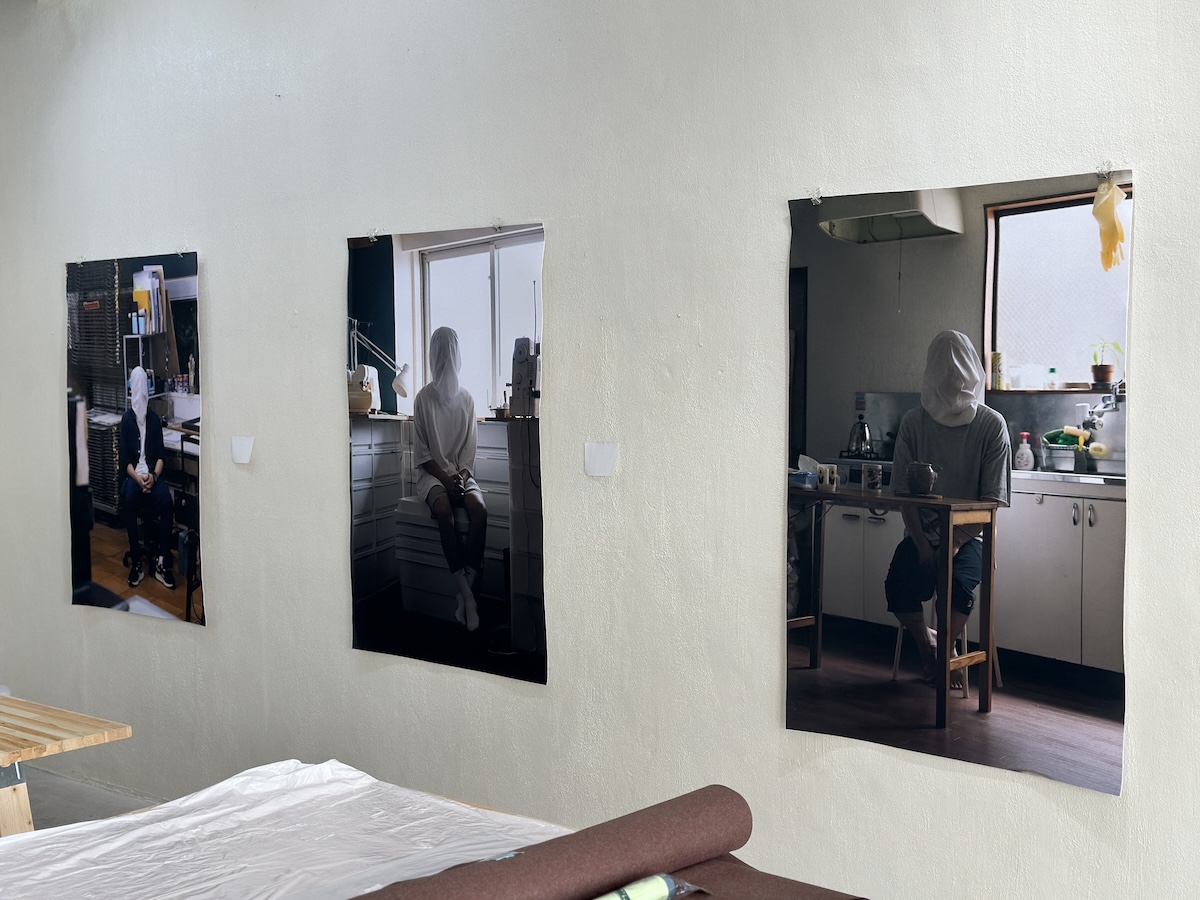
In the finished works, the photographed figures’ faces were covered with white cloth. This symbolizes the experience of being closeted, or having once lived under such circumstances. At the same time, the white cloth also refers to the cloth placed over the face of the deceased during a funeral, which suggests an act of quietly seeing off the past while still carrying the remains of such an experience. This practice also reflects a sense of discomfort toward how it is socially assumed that one’s sexuality should be disclosed. This project attempted to express the idea that coming out is not the only affirmative choice, and that remaining silent or secretive can also be chosen as a valid way of living.

The photographic works were presented in soft frames made of felt. Through felt’s softness and tactilely intimate impression, these works sought to suggest uncertain and ambiguous images of family in contrast with how family portraits had been conventionally framed and presented.

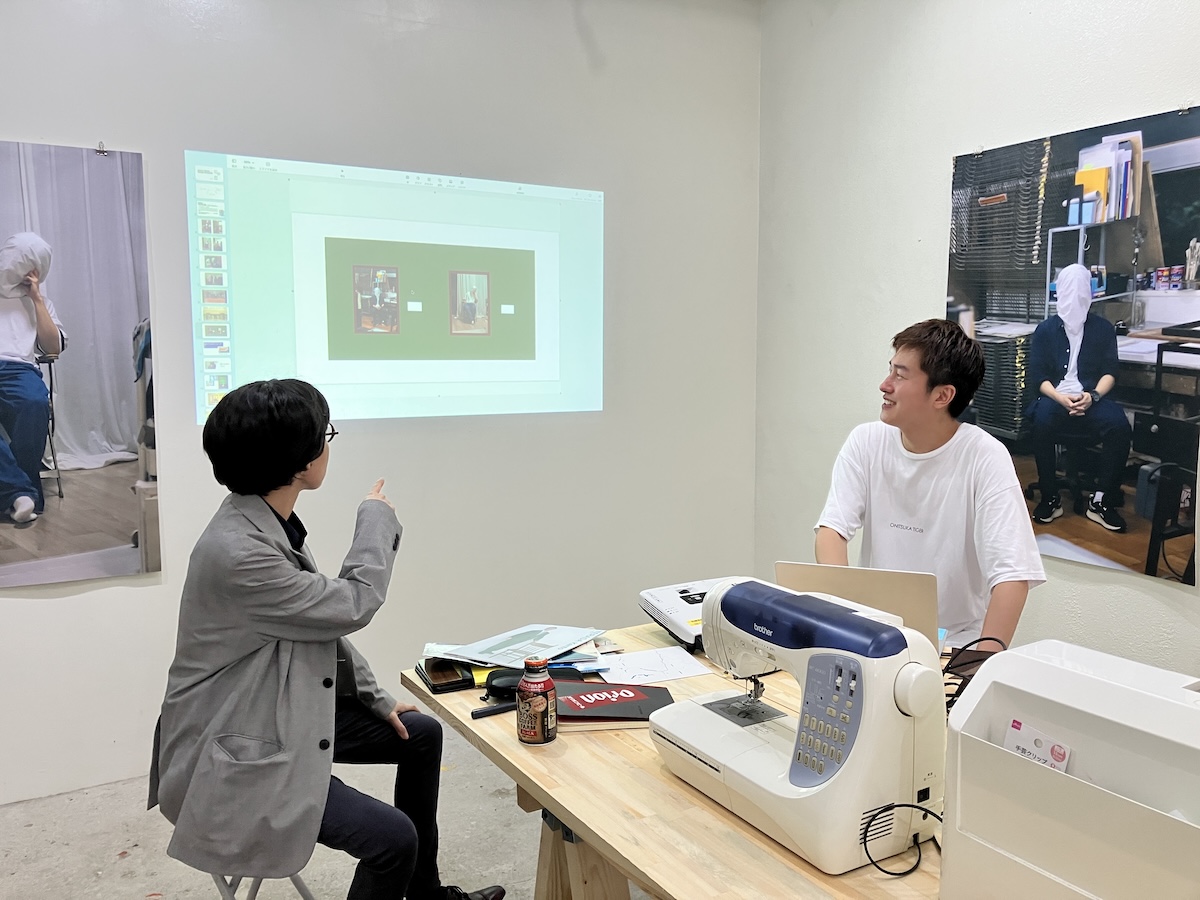
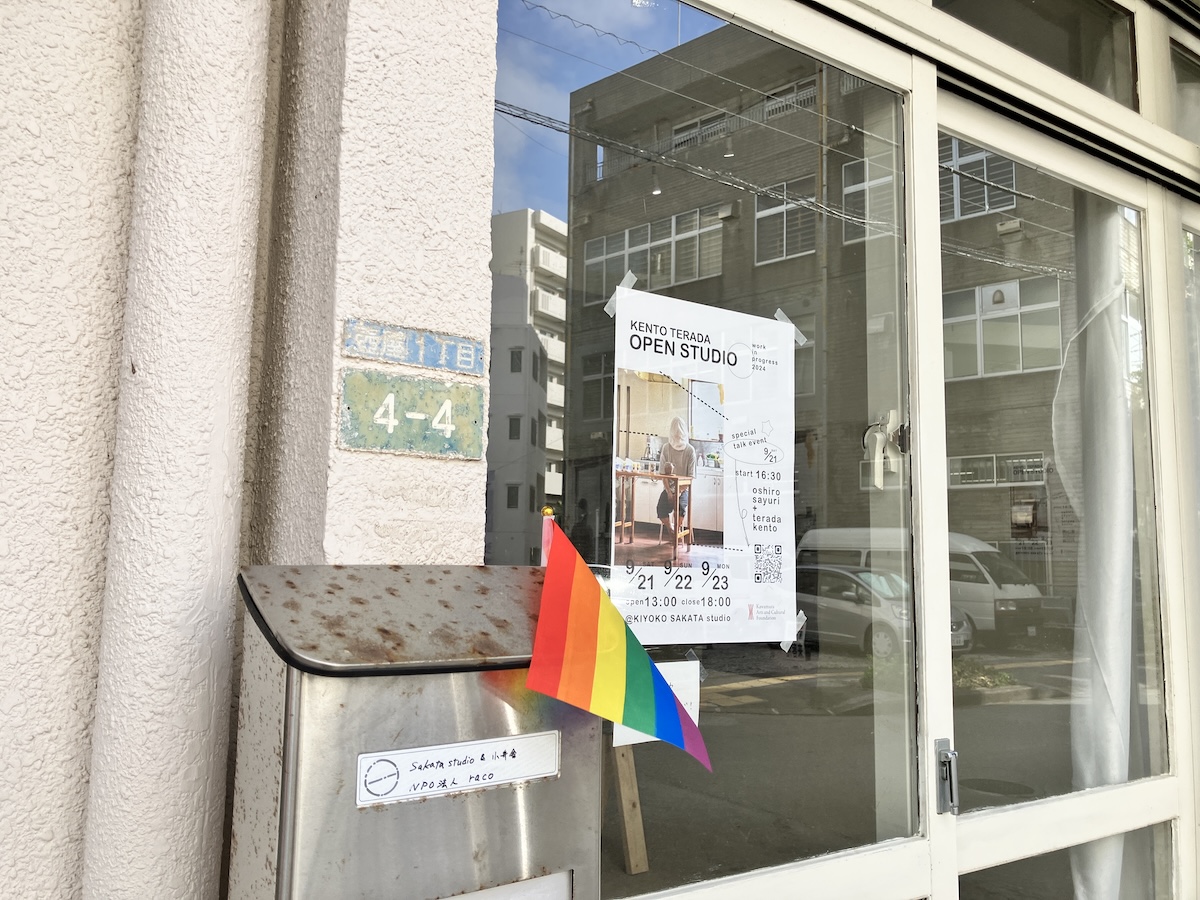
As part of this project, an open studio was organized to show the production process to the public, and conversations were held with visitors while giving a presentation about the background of the artworks and research. This open studio created opportunities to discuss today’s social conditions and the nature of the family with the visitors.

In addition, a talk was held with the guest speaker, Sayuri Oshiro (Curator, Okinawa Prefectural Museum of Art), who specializes in Okinawan art history and gender studies. This talk addressed the social conditions and issues faced by sexual minorities within the regional context of Okinawa, as well as how these subjects have been represented in art and culture. In the latter half of the event, a Q&A session was conducted with participants, where gender and sexuality in Okinawa and the possibilities of queer representation were further discussed.
Installation view from the open studio


[Outcome]

Through this project, several crucial insights were gained on how sexual minorities have navigated society in their everyday lives. Before conducting the interviews, the applicant assumed that experiences of presenting oneself as heterosexual would primarily be spoken of as an event in the past. In reality, however, many of the participants described that they still needed to present themselves as heterosexual depending on the situation. This made it clear that such forms of camouflage are not merely past experiences, but ongoing practices that occur within the relationships with society even today.

Some of the interviews also revealed that the pressure on queer people is caused not only by heteronormativity, but can also exist within LGBTQ communities themselves, where certain expectations of how one should “appear as queer” may be imposed. While queer identities have become increasingly visible, some participants mentioned their experience of internal conflict between their own ways of living and the forms of behavior expected within the community. This highlighted the complexity in the way of living as a queer person, which cannot be understood as a straightforward narrative of liberation.

Furthermore, discussions at the talk event provided an opportunity to be reminded of the gap between the development of institutions and real life. Guest speaker Sayuri Oshiro pointed out that in Okinawa, the close-knit nature of kinship networks and local communities could make coming out particularly difficult. Even as institutional frameworks continue to develop, social values and the structure of interpersonal relationships within local communities could keep causing a challenging atmosphere for queer individuals to openly disclose their sexuality.

Through these conversations and discussions, this project reaffirmed the importance of documenting how queer people build relationships and protect themselves within society. The insights gained in this project suggest aspects of the lived experience as a queer person that cannot be fully understood through institutional development alone, and they have become significant references for future practice and research.

Talk event with Sayuri Oshiro at the open studio