archive FY2023 ARCHIVE

* This article has been edited and reconstructed based on the report submitted to the Kawamura Foundation for the Promotion of Culture and Arts.

Re-heat and Reborn

[Application project]
Re-heat and Reborn

[Applicant]
Yukina Komiya

[Subsidy] 500,000 yen


[Overview]
In November 2021, my grandmother in Okinawa passed away at the age of 93 while looking forward to celebrating “Kajimayaa,” the Okinawan longevity celebration for her 97th year, according to the traditional counting system. Due to travel restrictions and quarantine measures during the COVID-19 pandemic, I was unable to travel back to Okinawa from Taiwan, where I am currently based. Her final moments, the wake, the interment, and the funeral—all I could do was join them remotely through a screen. In reference to “Zhǐ zā,” the traditional paperwork often seen in, and essential to, Chinese religious rituals and funerary practices, my grandmother’s Kajimayaa was conducted in this project. Zhǐ zā includes various types of paper offerings, from paper effigies of different deities to replicas of everyday items such as houses and cars, all made from paper and burned as offerings so that the deceased may continue to live well in the afterlife.
The documentation team for the project consisted of members with a wide range of cultural perspectives and sensibilities, including those from Japan, Okinawa, the Chinese-speaking world, Europe, and North America.


[Held / Implemented / Announced]
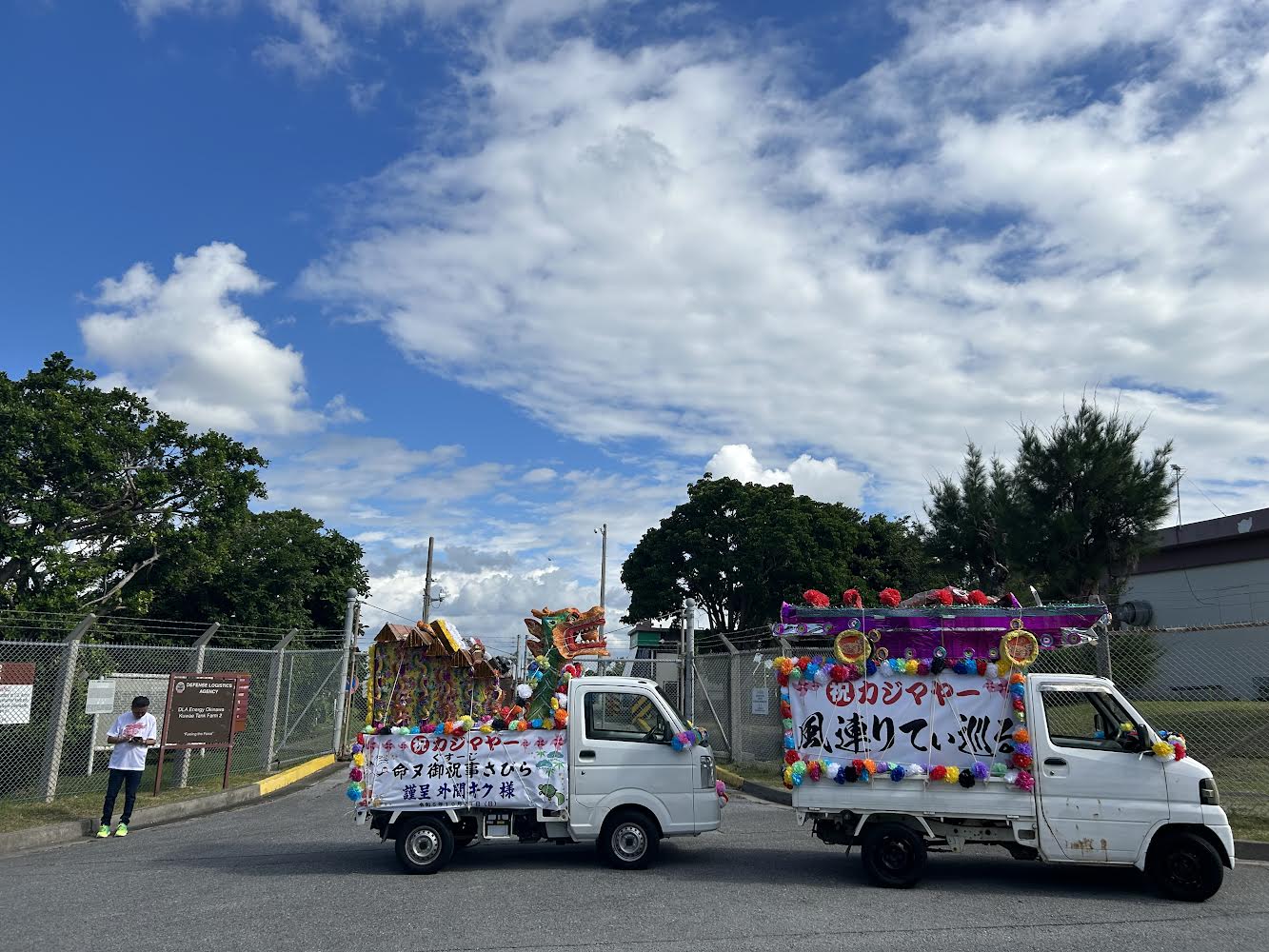
A Kajimayaa parade in a convertible and a Hari (dragon) boat
●Production
Period: Early September 2023 - October 21

●Re-heat and Reborn | October 21
<Locations>
Yomitan Village, Okinawa / Yuntanza Museum → Naha City…… The event concluded with the burning ritual (otakiage) of the objects, followed by a performance by a sanshin musician and “kachāshī,” traditional Okinawan celebratory dancing.
<Number of participants>
Approx. 100 people (from inside and outside of Okinawa, Taiwan, Germany [online participation])

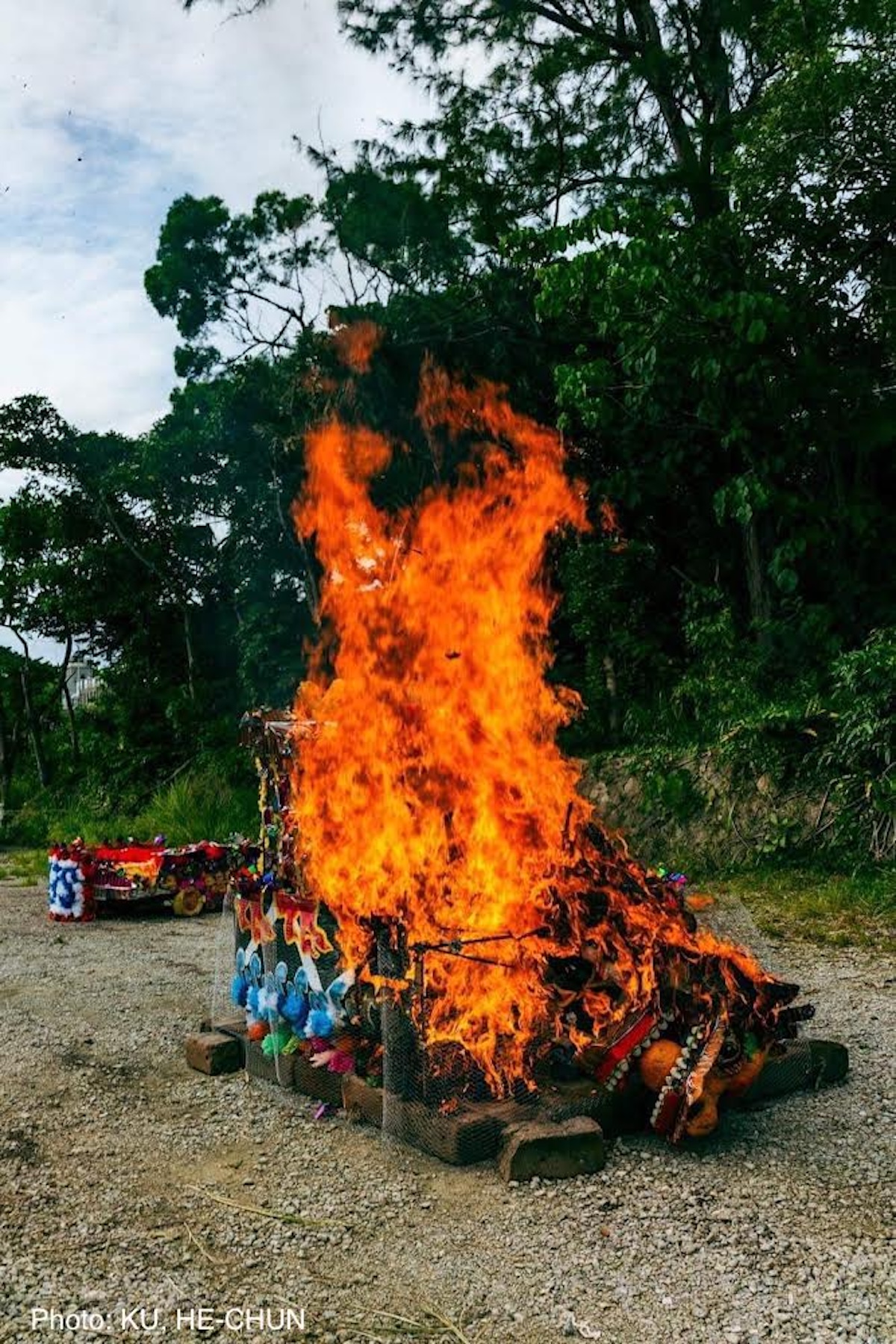
The burning ritual (otakiage) of the Hari (dragon) boat used for the Kajimayaa


[Outcome]

This project was undertaken to reconsider how we confront aging and death, which everyone inevitably experiences, and to explore ideas for surviving in a super-aging society through the combination of the Okinawan custom of “Kajimayaa” and the tradition in the Chinese-speaking world of “Zhǐ zā.”
Referring to traditional Taiwanese Zhǐ zā techniques, two vehicles (a left-hand drive convertible and a Hari (dragon) boat for the traditional event “Agibari,” which is passed down in Kowan, Urasoe City, Okinawa) were prepared. Around these vehicles, approximately 3000 folded paper flowers were made by participants as floral offerings. In this project, a parade along a national route and an event featuring Ryukyuan Dance performances were organized on October 21, 2023, the day my late grandmother would have celebrated her Kajimayaa. A large number of participants gathered for this event, and we were able to burn the Zhǐ zā-Kajimayaa offerings and deliver the celebration to her while the participants watched. After the burning ritual, we connected online with a sanshin musician based in Germany, and the project was concluded with the traditional Okinawan improvised dance “kachāshī,” which is essential to festivities in Okinawa, joined by all the participants. The project was documented through drone footage, recordings by Okinawan photographers, and coverage by Taiwanese journalists, and these materials are currently being developed into a new body of work.
This Kajimayaa project was featured on the Okinawa Times, Ryukyu Asahi Broadcasting, and United Daily News (Taiwan).
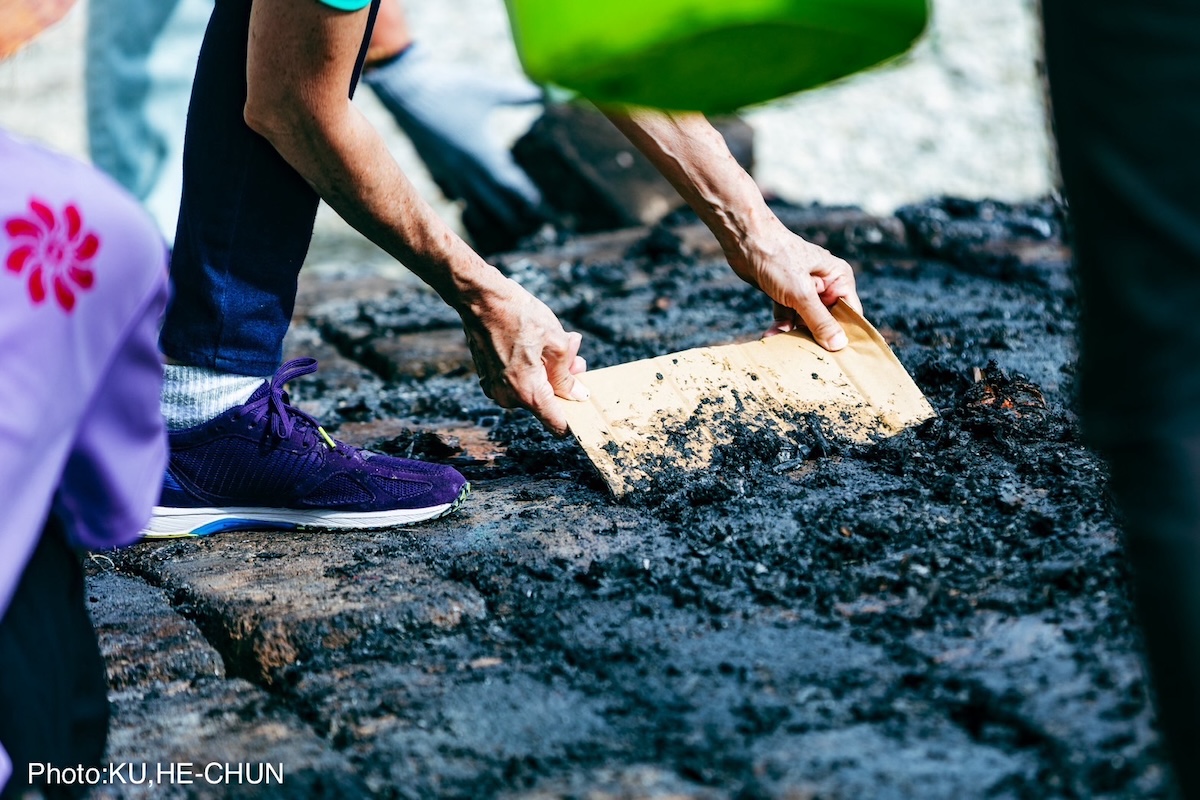
Collecting the remaining ashes with the participants