* This article has been edited and reconstructed based on the report submitted to the Kawamura Foundation for the Promotion of Culture and Arts.
-
“Encore” ProjectProject Name: “Encore” ProjectApplicant: Yuni Hong Charpe
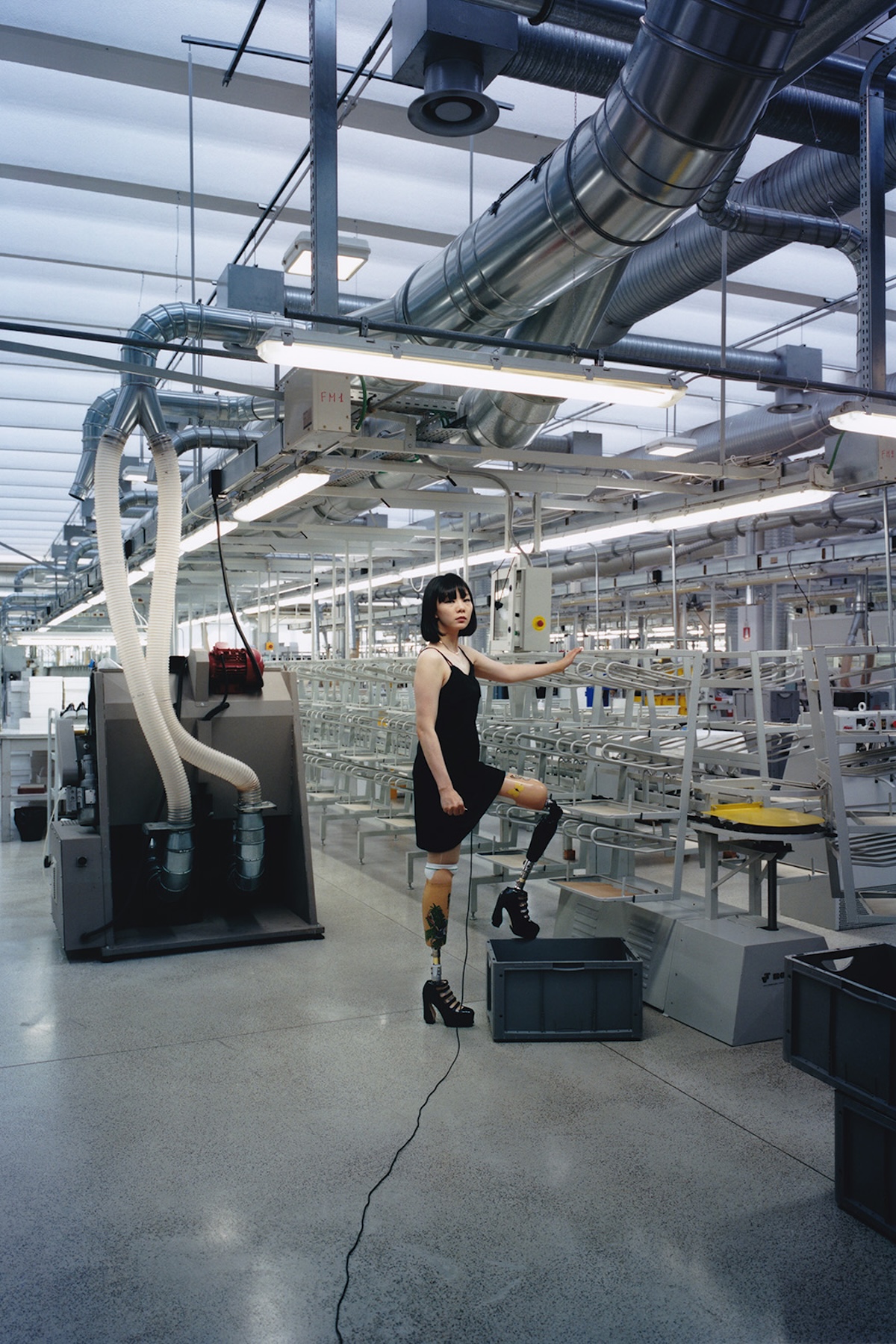
The “ENCORE” project involves workshops with people of overseas backgrounds living in and around Toyooka City, Hyogo Prefecture; the development of a lecture performance in collaboration with a Korean dance artist living in Japan and a Japanese–French interpreter; and video production. The project examines the complex identity of Choi Seung-hee, once known as the “Dancing Princess of the Peninsula,” who was active across Japan, Korea, Europe, the United States, and other parts of the world. By “reenacting” history through different methods, the project seeks ways to reconnect it with contemporary society, while reconsidering questions of identity and various issues that became visible during the COVID-19 pandemic. Following the residency production, presentations are planned both in Japan and internationally, including Kyoto and France.
-
Outdoor Screening of ShadowingProject Name: Outdoor Screening of ShadowingApplicant: Yuki Harada
The work Shadowing examines the trajectories of people who migrated from Hiroshima and Yamaguchi, Japan, to Hawaii. The project was inspired by Harada’s encounter with a gravestone in an immigrant cemetery in Lahaina, Maui Island, which belonged to a person originally from Kuken-cho, Hiroshima, and the gravestone was positioned facing west, toward Hiroshima. This screening event took place at Shirashio Park in Kuken-cho, where a screen was installed facing east—toward Hawaii—and the Shadowing was presented as an outdoor screening. Because the screening took place in an open outdoor setting, locals living in Kuken-cho also witnessed the event.
-
The city for invisible peopleProject Name: The city for invisible peopleApplicant: Non-Profit Organization Maebashi Art Practice & Yusuke Shibata
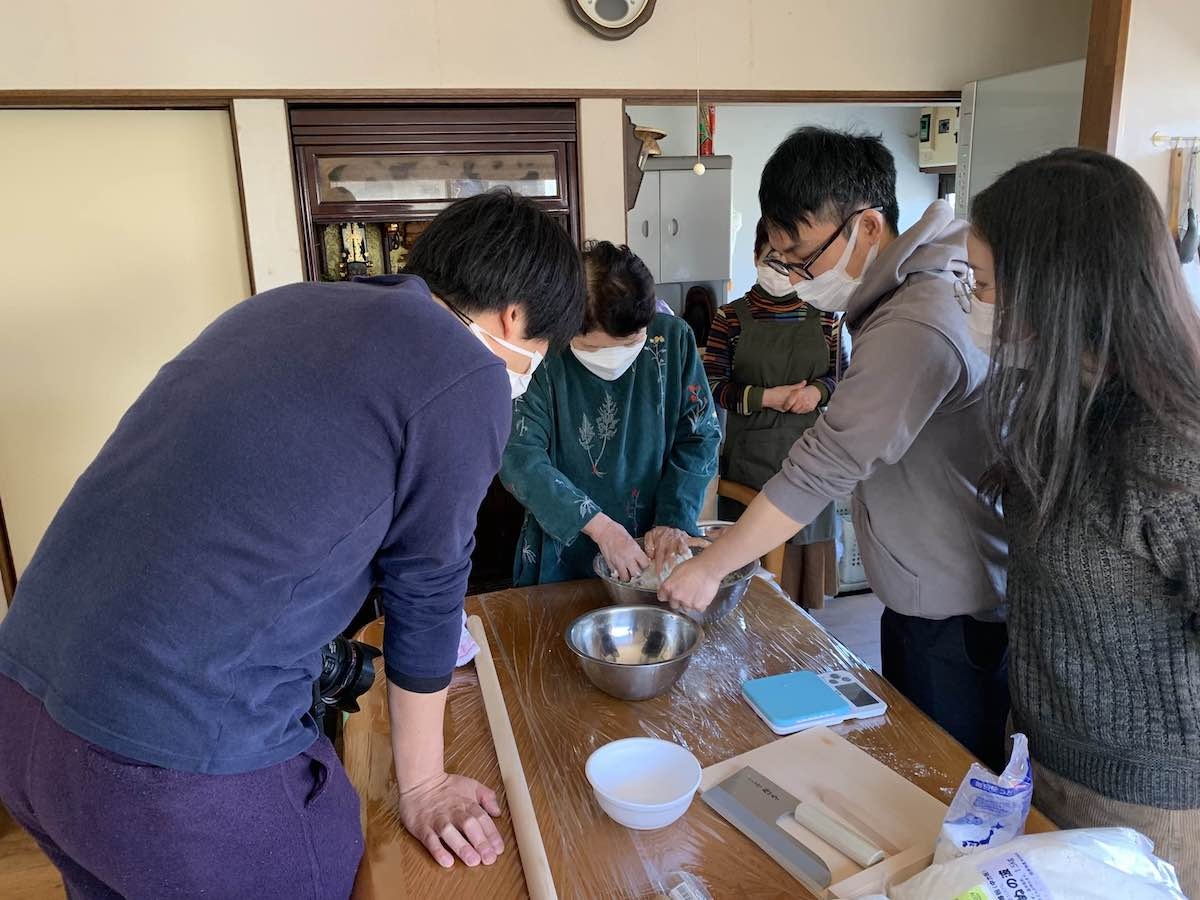
Gunma Prefecture has experienced a rapid increase in its immigrant population, ranking third nationwide in a 2019 survey. Despite not containing a major metropolitan area, the prefecture hosts a remarkably large number of migrants, making its situation distinctive within Japan.
Amid the COVID-19 pandemic, although circumstances differed depending on nationality and individual conditions, many people found themselves unable to move across borders and continued their lives within Japanese society. This project invites Yusuke Shibata as a guest artist to conduct research that brings visibility to these communities. -
Conducting a Quantitative Survey on Harassment IssuesProject Name: Conducting a Quantitative Survey on Harassment IssuesApplicant: Investigating Discrimination, Harassment, and Inequality in the Arts (IDHIA)
A Quantitative survey on harassment issues targeting individuals with experience working in creative and expressive fields was launched in July 2022. The project aimed to clarify the realities of harassment and gender disparities within these fields. Responsibilities included completing the survey design and developing outputs such as layouts and presentation materials. Zoom meetings were held biweekly (excluding the year-end and New Year holiday period), approximately ten sessions in total. Individual tasks and progress were shared through Google Docs. The research team generally consisted of five to ten members at any given time.
-
Hilos que Luchan, Manos que Sanan: NUESTRA JUSTICIAProject Name: Hilos que Luchan, Manos que Sanan: NUESTRA JUSTICIAApplicant: Hilos que Luchan, Manos que Sanan
The Hilos que Luchan, Manos que Sanan workshop began together with participants of the online course “South American Feminist Art Activism,” organized by Kasumi Iwama. Iwama first gave a short talk on femicide and activism in Ecuador, South America, after which participants discussed the themes together. The content of these discussions was later reflected in the making of bandanas.
During the production process, participants continued conversations while working with their hands, and a wide range of topics emerged, including sexual harassment in workplaces and schools, molestation on public transportation, childcare, sexism, religion, the emperor system, discrimination in the art world, books, and films.
Despite the limited duration of only two hours, the green bandanas created through the workshop were completed with remarkable strength and presence. In addition to needles and thread, materials such as felt and beads were also provided, allowing both beginners and experienced participants alike to engage fully in the making process. -
The Island Atlas: Our Words for the Future of Our HomelandProject Name: The Island Atlas: Our Words for the Future of Our HomelandApplicant: ELGUEDA WARD STUDIO (Ximena Elgueda & Stephen Ward)
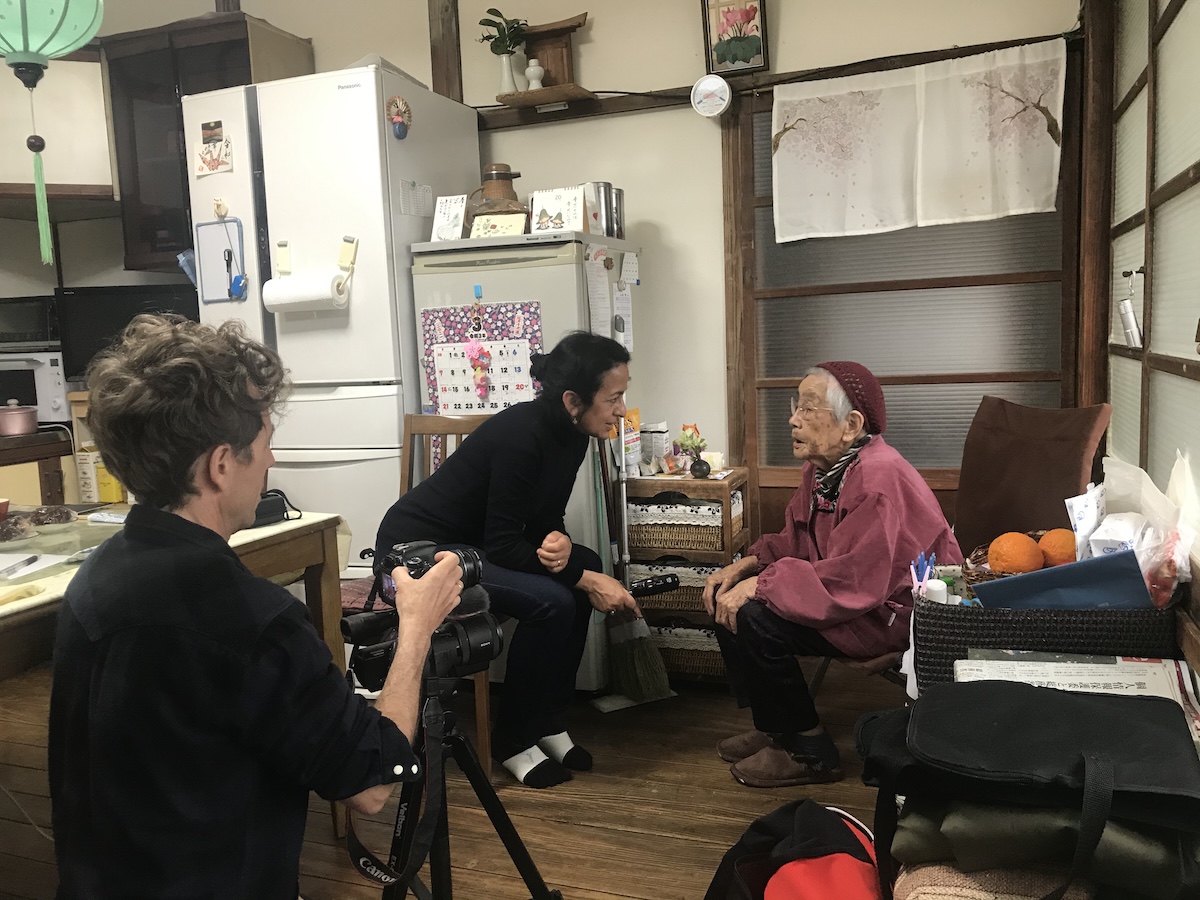
Island residents’ spiritual connection to their “hometown” is deeply tied to the foundation of their sense of self and existence. In this project, participants who all originated from Himeshima Island (Oita Prefecture) but had chosen different life environments engaged in remote dialogue and expressed the images that emerged through these exchanges onto maps, moving beyond the opposition between “imagination and reality.” The resulting maps became an atlas, forming a system of propositions concerning the future of the island and aiming to deepen understanding of both individual consciousness and the consciousness of the community as a whole.
ELGUEDA WARD STUDIO (EWS) believes that, within socially engaged art, artists can act as catalysts who encourage social participation through art rather than through political methods. In 2020, EWS carried out the Chair Project under the theme of “memories of one’s hometown” in order to record the fading memories of local people from multiple perspectives. Although many conversations about “memories of one’s hometown” also touched upon the future of the island, there appeared to be overall little sense of agency toward the future.
Through remote and in-person dialogue among people originally from Himeshima, participants shared their feelings and perspectives on the condition of the island from multiple angles and collaboratively created “future visions of Himeshima” based on an actual map of the island. Participants present on site took notes during the dialogues and, while confirming ideas together with the others, wrote down on an aerial map of Himeshima the “future visions” that emerged through the conversations.